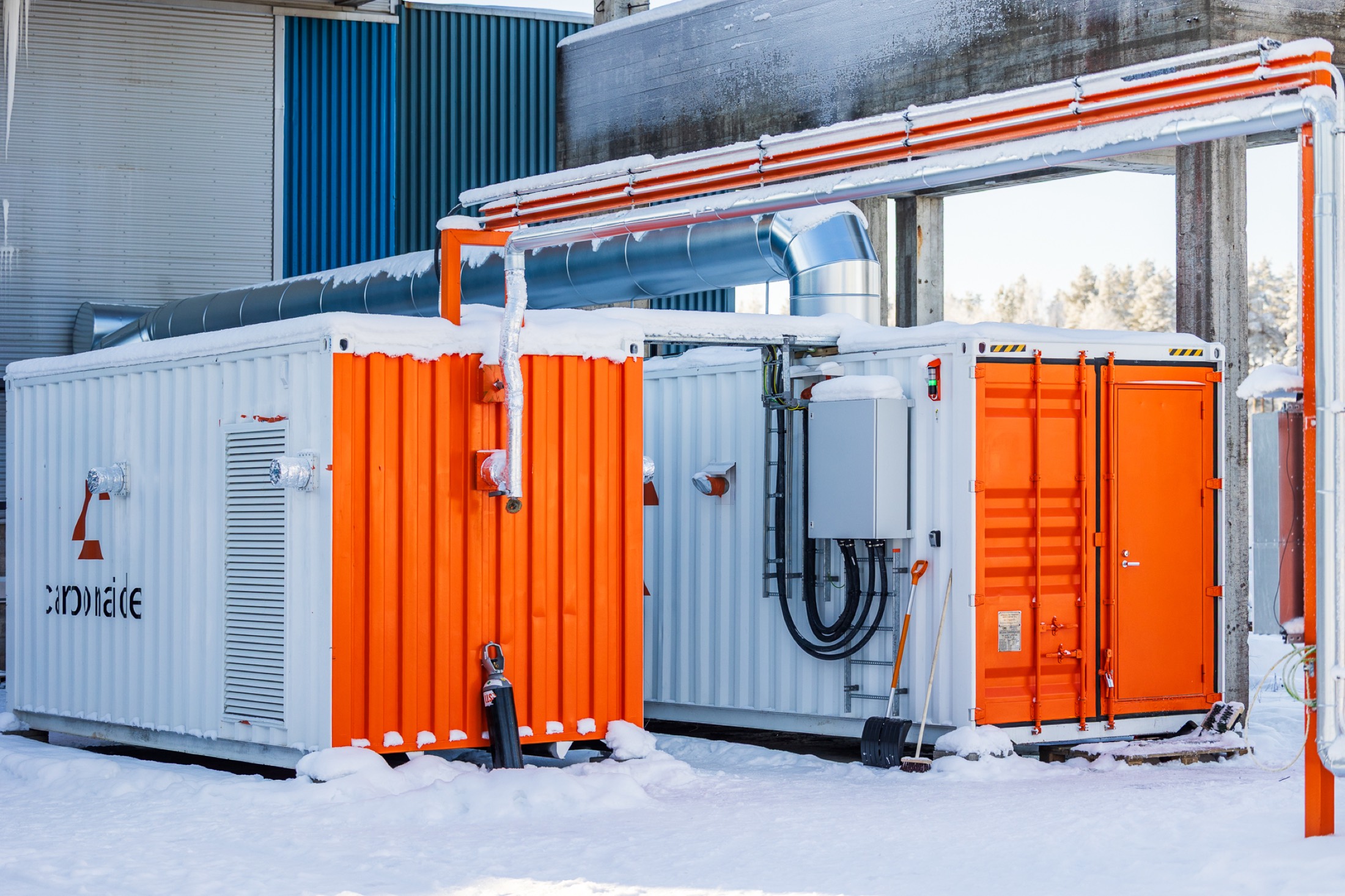
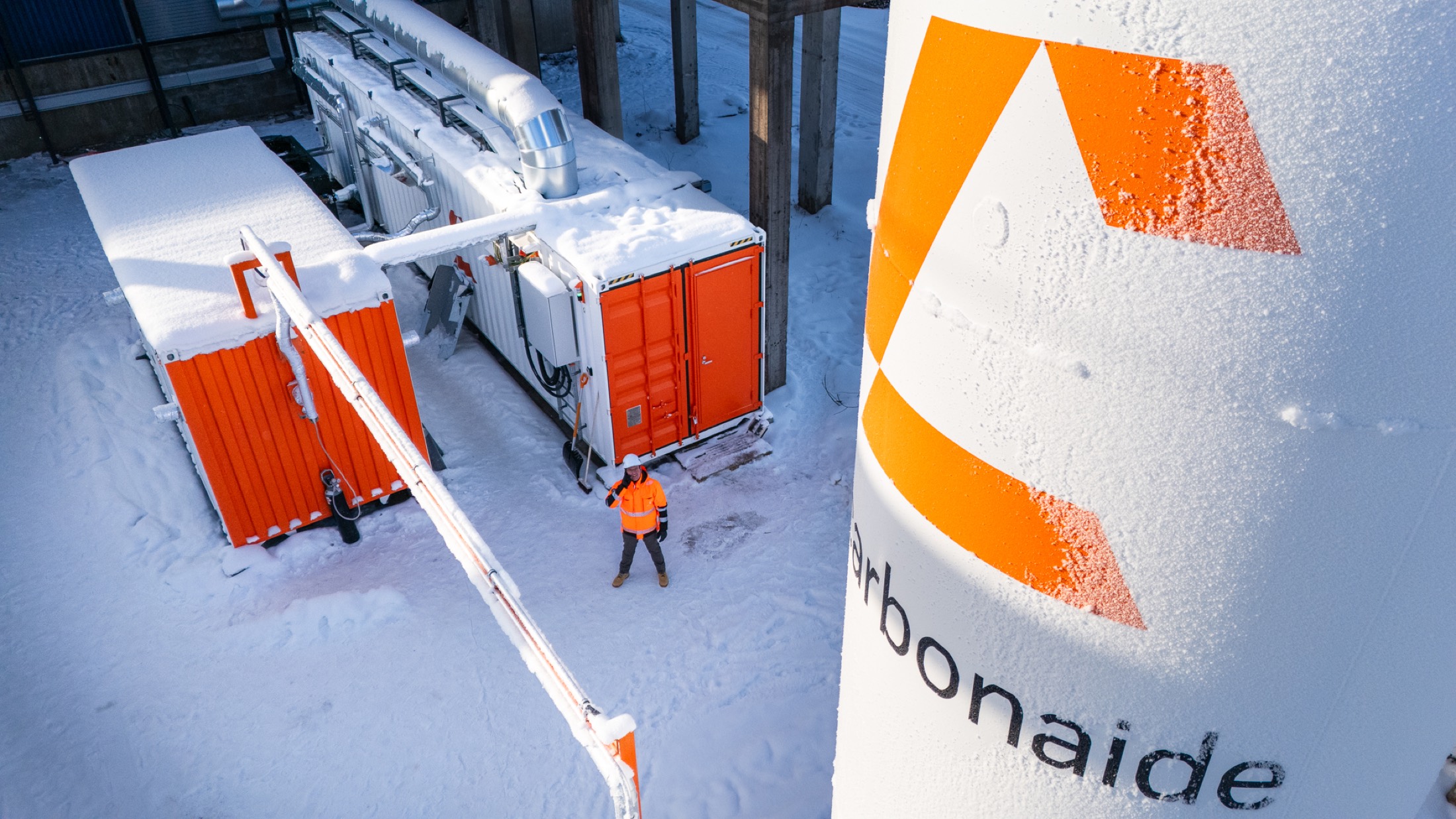
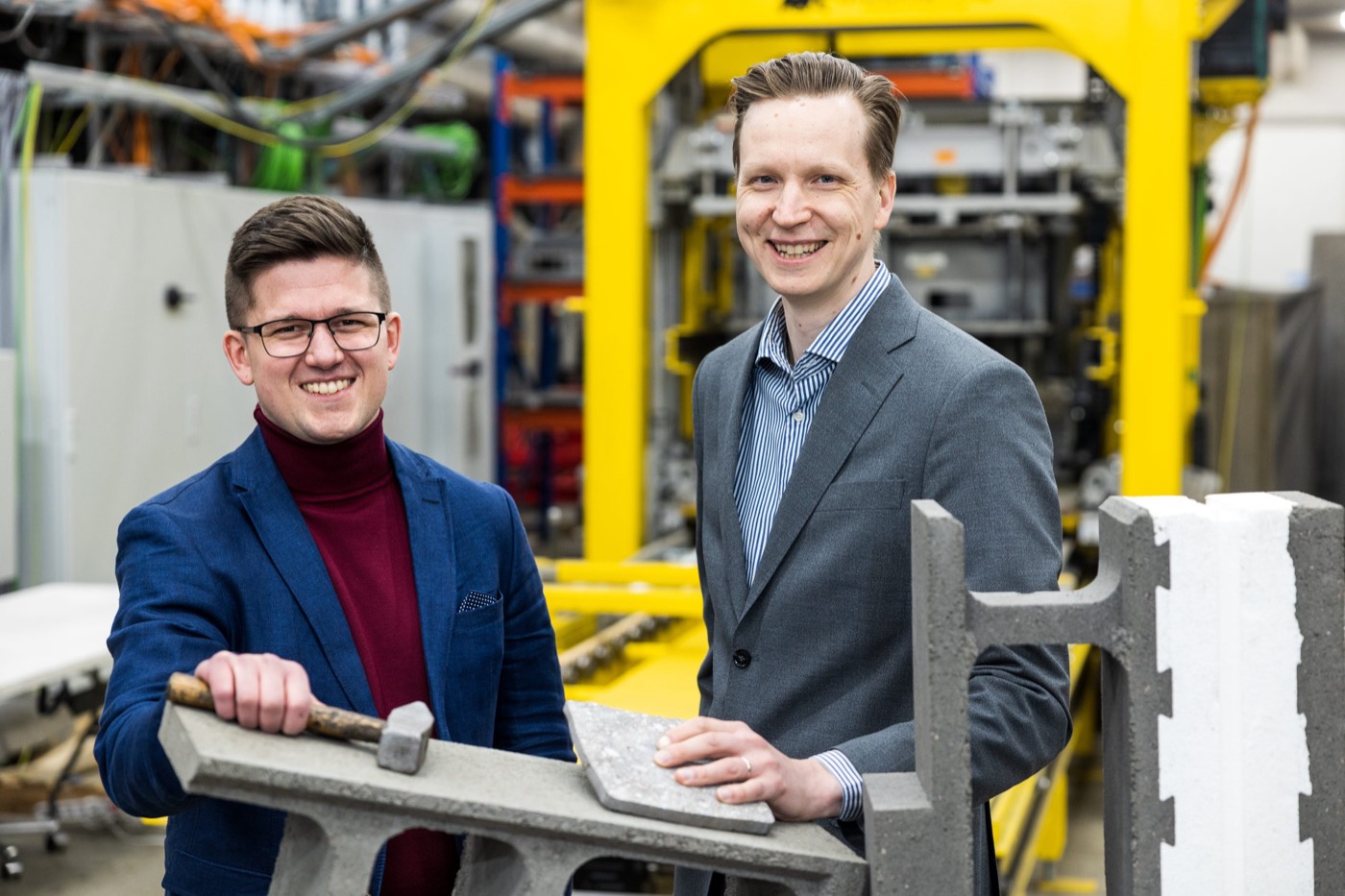
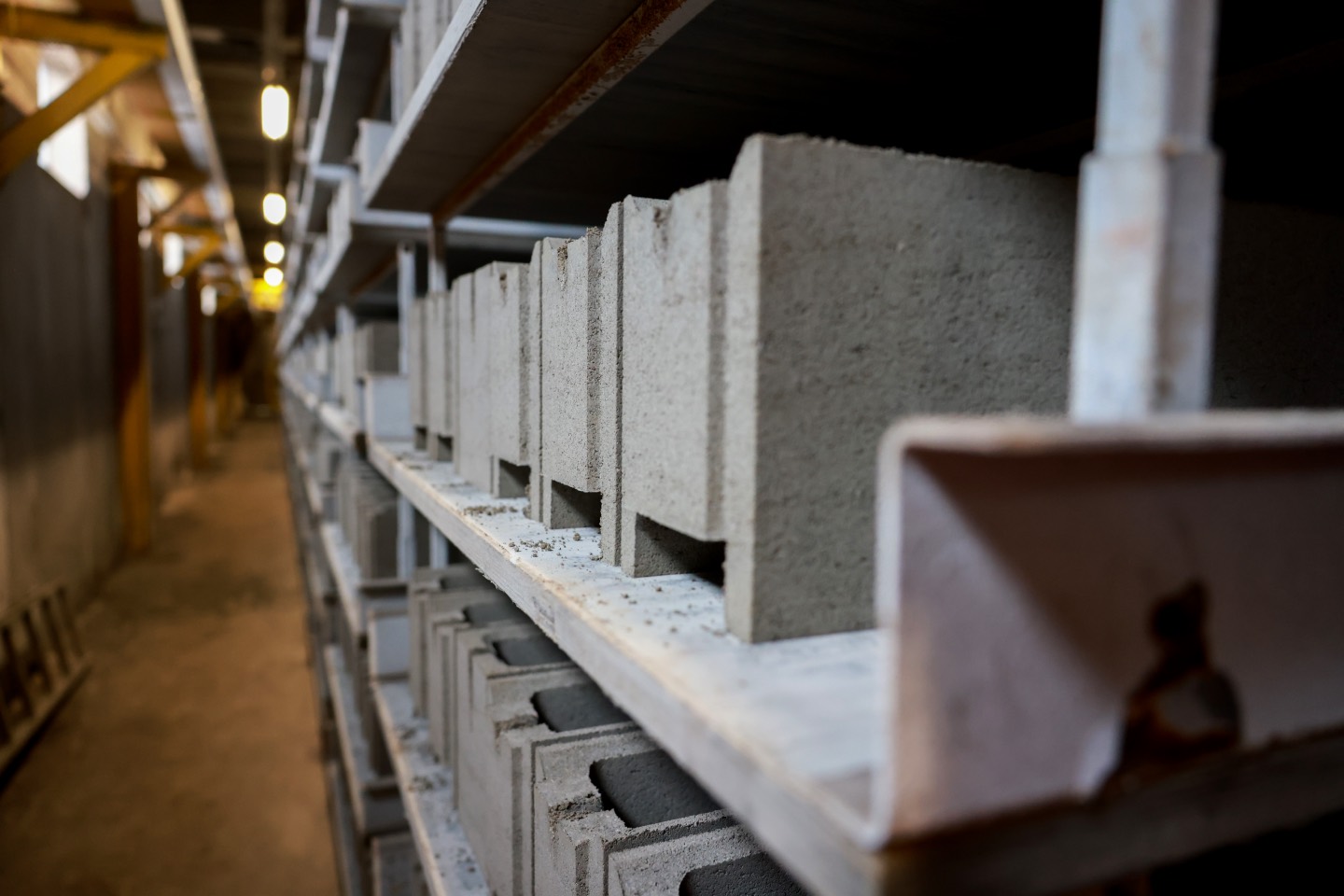
Carbonaide CO₂ curing units at Lakan Betoni, Finland, 2026
Our mission
Turn building materials from a large emission source into a carbon sink. Concrete plants use CO₂ during curing to make better products and store the carbon in them for good.
Where we are now
In commercial production since 2024. Scaling to precast plants outside Finland.
€3.7M raised in January 2026 (BeBeez). Our project “Carbonaide RMC” appears in the European Innovation Council's published list for the EIC Accelerator cut-off of May to July 2026, announced on 16 November 2026.
Inside the chamber, CO₂ turns into stone.
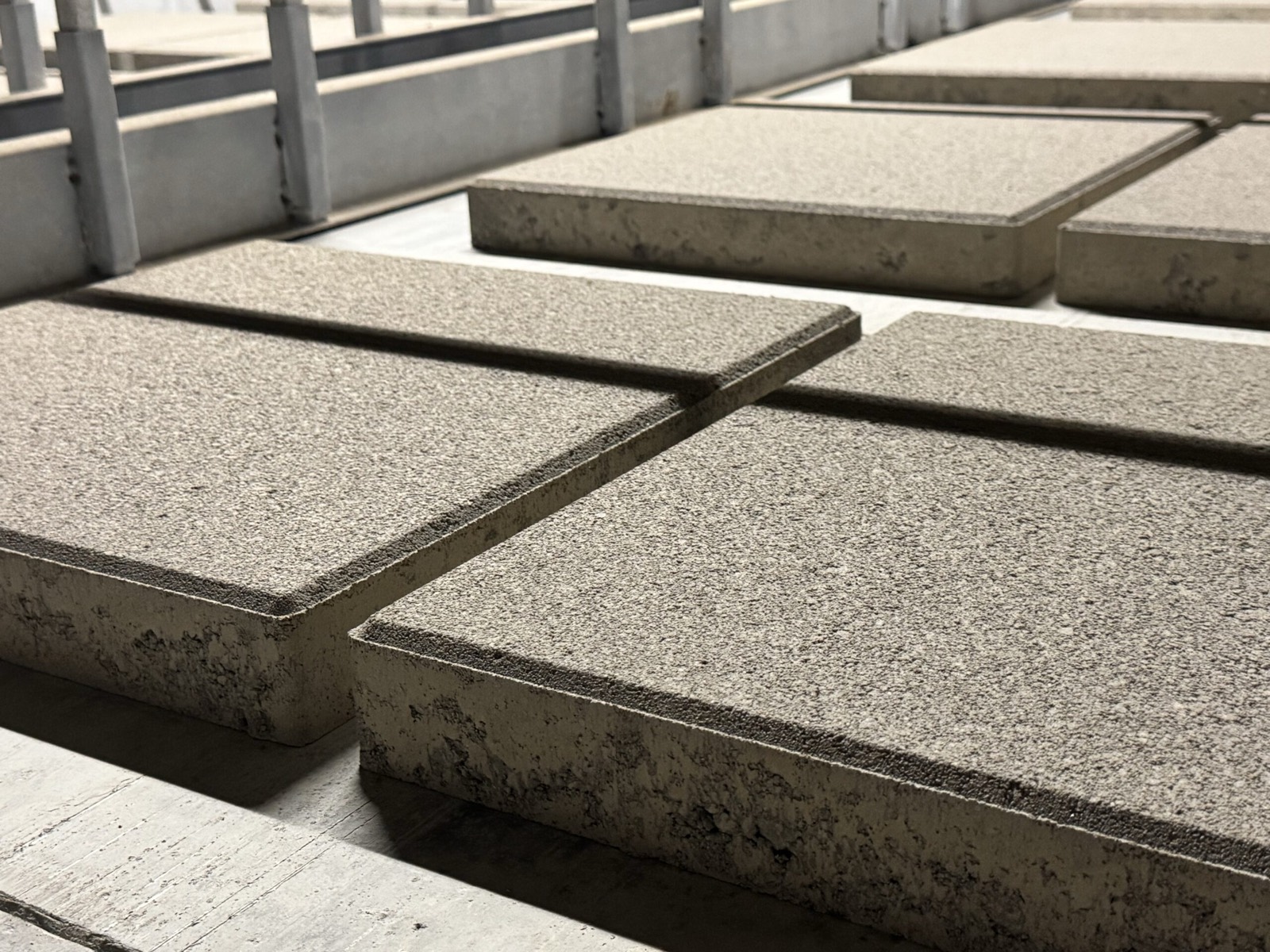
During curing, the Carbonaide system feeds carbon dioxide into the chamber at controlled conditions. It reacts with the cement in the fresh element and mineralises into carbonates, so the carbon stays in the product for the life of the building.
Fresh element enters
CO₂ flows in
CO₂ mineralises
Carbon stored for good
Illustrative example: 1 m³ element with 300 kg of cement, using the default assumptions of Carbonaide's published ROI calculator, binds about 48 kg of CO₂. Not to scale.
Your plant, one year
Enter your annual output and the cement content of your normal mix.
m³
kg / m³
0t CO₂ / year
stored permanently in your concrete products, while you buy 0 t less cement.
Stored in products
0 t
Avoided with less cement
0 t
Total CO₂ effect
0 t
Indicative estimate. Uses the formulas and defaults of Carbonaide's own pricing and ROI calculator: 20% less cement, 20% of the remaining cement mineralised with CO₂, 750 kg CO₂ per tonne of cement. Real results depend on your products and mix.
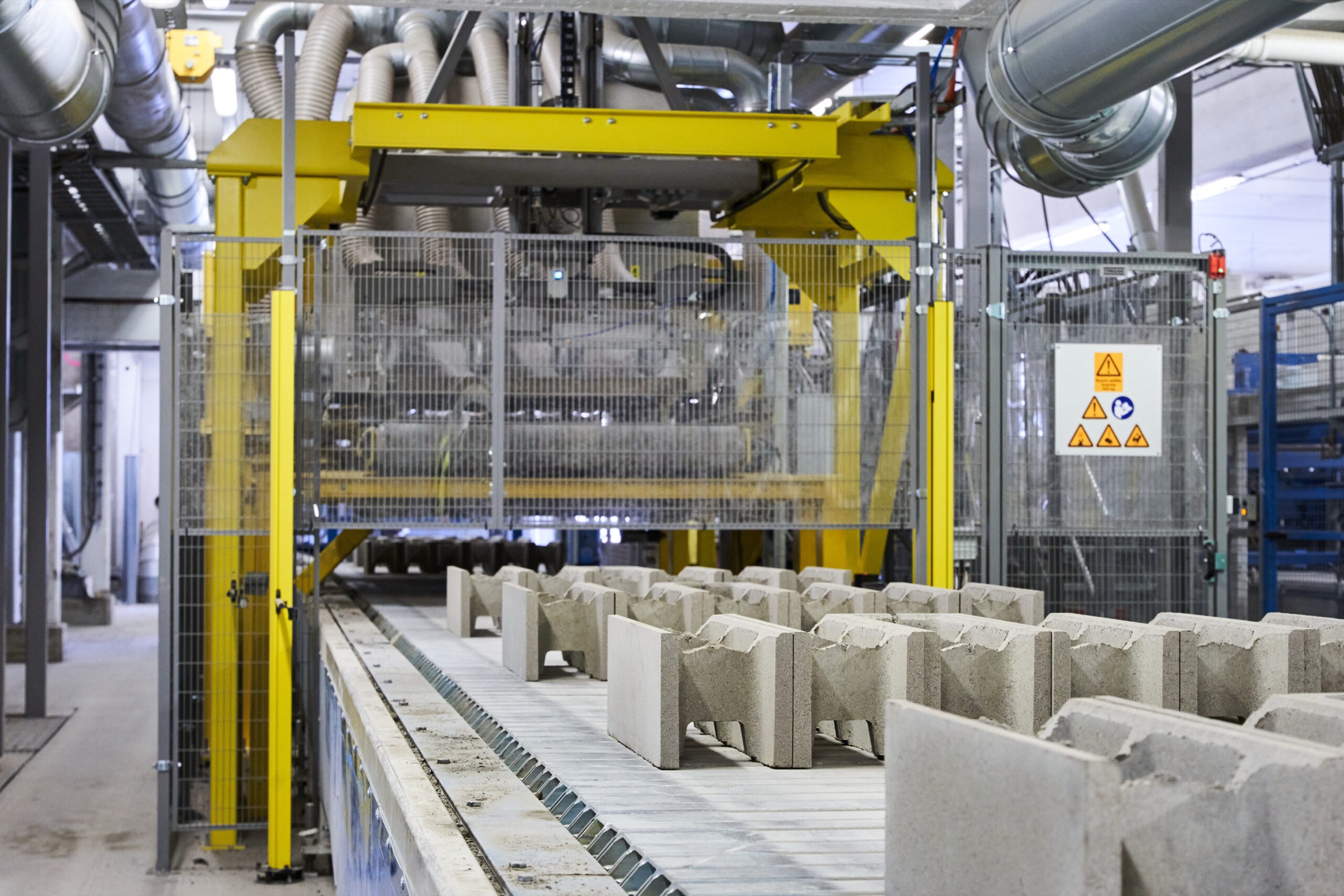
The curing system sits next to your existing line and controls CO₂ flow and curing conditions. You lower cement content and speed up curing, and every tonne of stored CO₂ is measured and certified.
Products cured with Carbonaide carry verified carbon storage data by product type and batch. That data feeds EPD updates and can back certified carbon credits.
Founded on research started at VTT Technical Research Centre of Finland in 2018. Commercial since 2024, with first certified carbon credits sold and new plant agreements signed in 2025.
€3.7M round, January 2026
Listed in the EIC Accelerator results, November 2026
Next: global sales and new applications beyond precast